
Key takeaways
- Body recomposition means losing fat and building muscle – at roughly the same weight.
- It works best for beginners, returning lifters and people with higher body fat.
- The keys: lots of protein + strength training at calories around maintenance (or a slight deficit).
- The scale barely moves – measure via body fat, measurements and photos.
- Slower than "bulk then cut", but without extreme phases.
"Can you lose fat and build muscle at the same time?" – one of the most common fitness questions. The answer: yes, under certain conditions. That is exactly what body recomposition is. It is not a trick but a strategy that works surprisingly well for the right people.
What body recomposition means
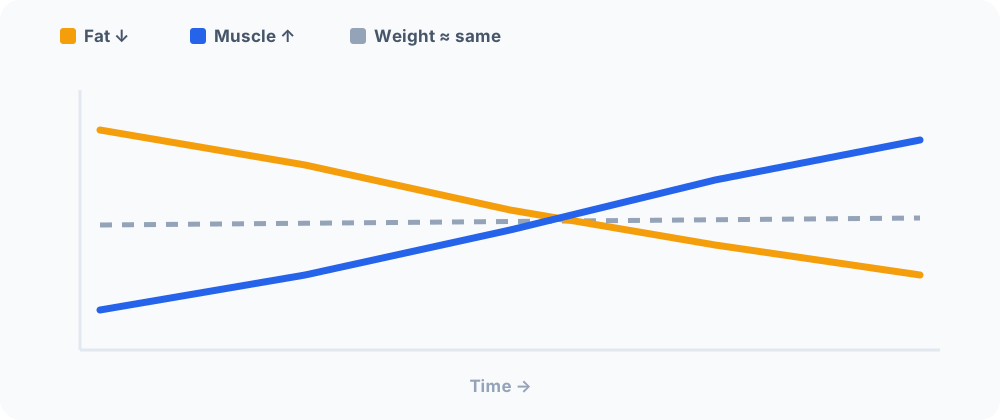
Normally it is either a bulk (calorie surplus) or a cut (calorie deficit). Body recomposition attempts both at once – improving your body composition while your weight stays nearly the same. So the scale barely moves; the mirror and your body fat percentage, however, change a lot.
Who it works especially well for
Recomp does not work equally well for everyone. It is most effective for beginners (a large newbie effect), returning lifters after a long break ("muscle memory") and people with higher body fat (plenty of energy from fat stores). It gets harder for lean, advanced lifters – they usually progress faster with separate bulking and cutting phases.
How to approach recomposition
Three levers decide it: calories around maintenance (or a small deficit if more fat should come off) – no big surplus, no crash deficit. Lots of protein, about 1.6–2.2 g per kg, toward the higher end during a recomp. And strength training with progressive overload – the stimulus that lets the body build or keep muscle while fat drops; the details are in the muscle building article. Add sleep and patience: recomp is a marathon, not a sprint.
Why the scale misleads you
When fat comes off and muscle goes on at the same time, your weight often stays nearly constant – even though your body visibly changes. Watch only the scale and you will get frustrated and quit too early. More reliable are body fat percentage, measurements, photos and strength over time. How to measure that in practice is covered in measuring body fat.
Recomp or bulk and cut?
Choose recomposition if you are a beginner or returning lifter, have higher body fat, or want to avoid extreme phases. Choose separate phases (bulk in a surplus, then cut) if you are already lean and advanced and want to progress faster.
Frequently asked questions
How long until recomposition is visible?
Usually months, not weeks – precisely because weight barely serves as feedback. Plan in quarters.
Do I need a deficit or a surplus?
Ideally around maintenance. If more fat should come off, a slight deficit; with a clear muscle focus, a slight surplus (then it is more of a "bulk").
Can anyone recomp?
In principle yes, but beginners and people with more body fat see it most clearly.
Bottom line
Body recomposition is real – strongest for beginners and anyone carrying a bit more body fat. Lots of protein, progressive strength training, calories around maintenance, and measure progress through body composition rather than the scale.
Note: general information, not individual nutrition, training or medical advice.